20 Surprising Turkey Facts You Should Know Before Thanksgiving
Once a year, turkey becomes the most popular bird in America. But how much do you actually know about this beloved animal? Drop some knowledge on...
Published 11 years ago
2
Eating turkey is NOT the reason you pass out after Thanksgiving dinner. - Yes, turkey contains the amino acid tryptophan, which is a precursor for serotonin, a brain chemical that makes us relaxed and sleepy. A tiny, tiny amount of tryptophan. You could have seconds or even thirds of turkey and still not consume enough tryptophan to make yourself drowsy. That open-pants nap your Dad takes after dinner is more accurately attributed to the enormous number of calories aka carbs, fat and sugar eaten at once. Stop blaming the turkey, piggies.
5
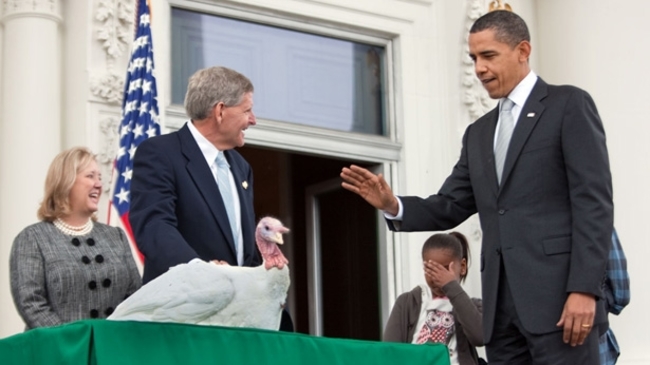
Pardoned turkeys don't live happily every after. - Every year since 1947, the President and Vice President of the United States have pardoned two domestic turkeys from their fate as oven fodder. It's a tradition that somehow makes us feel less guilty for killing 40 million of them. However, domestic birds are bred to be eaten, not frolic in a pasture. Their poor health means the spared birds usually die of natural causes in a year or so.
6
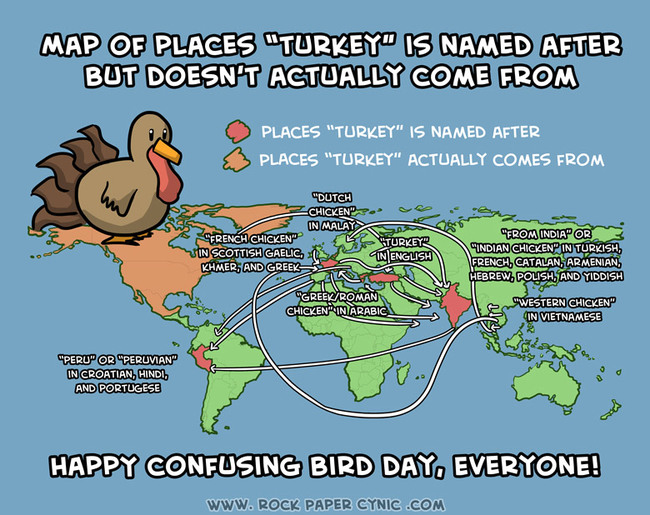
Turkey the food is named after Turkey the country. Kinda. - Legend has it that the turkey could have also been African guinea fowl made it to Europe in the Middle Ages via Turkey and thus became known as the "Turkey bird." When the first European visitors to America saw the native bird, the similarities were striking. Too lazy to come up with a new name, they just started calling it turkey.
7
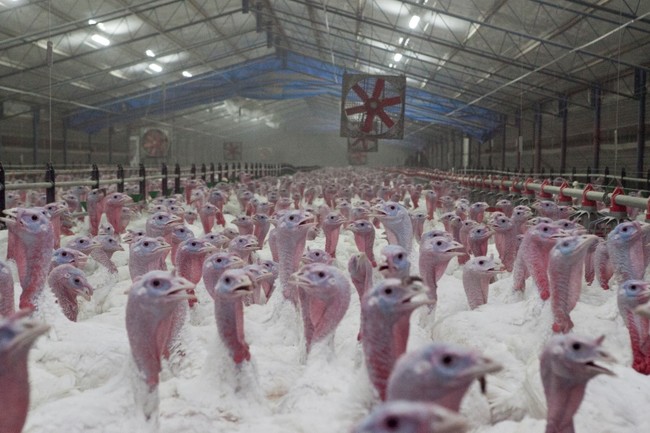
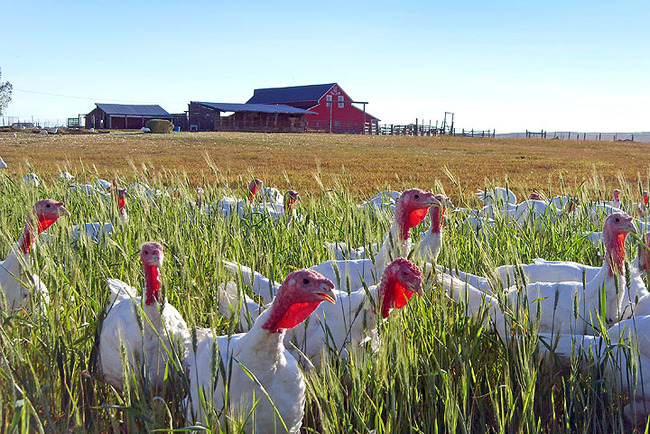
Turkeys freak out in crowds. - When they get spooked, they run for cover, an instinct that is useful in the wild, but is impossible in crowded pen conditions. In factory farming operations, each 20 lb bird has only about 3.5 square feet of space to move around. This means that when commercially raised turkeys get scared, they head to one place and pile up, smothering the ones that end up on the bottom.
8
The turkey on your dinner table is a mutant. - Domestic turkeys have been bred to have enormous breasts to make them more appealing to Americans who are obsessed with white meat. According to United Poultry Concerns, factory-farmed turkeys grow so quickly that if a seven-pound human baby grew at the same rate, the infant would weigh 1,500 pounds at just 18 weeks of age. As a result, these top-heavy birds have terrible leg problems and are unable to fly like their wild counterparts.
10
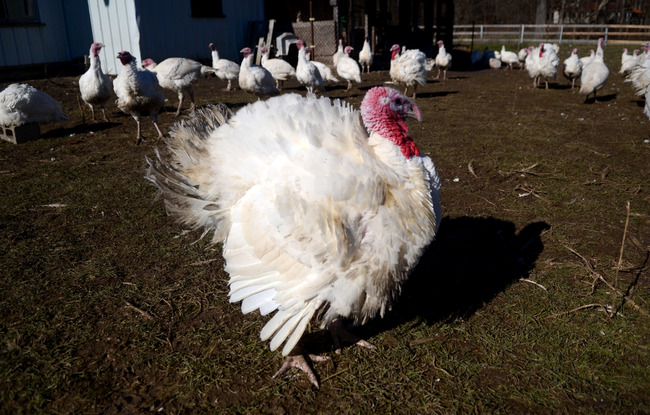
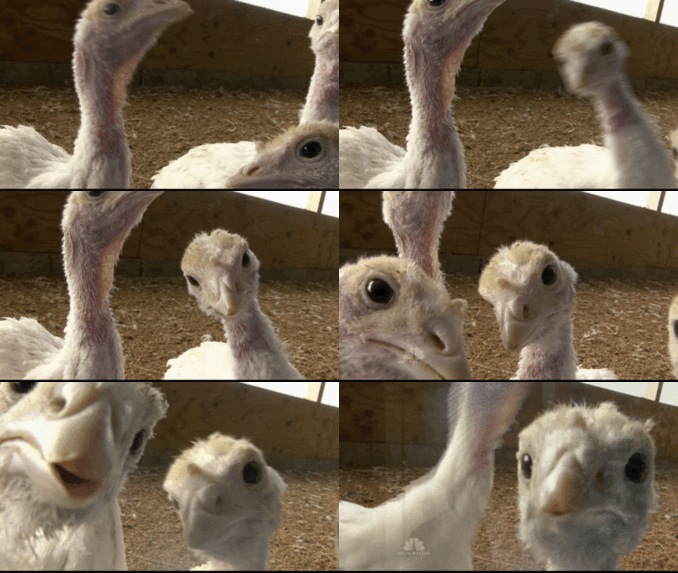
Every turkey you've ever drawn is wrong. - The turkey we eat doesn't look like the colorful turkeys we made in elementary school. The Large White or Broad-Breasted White is what most consumers find at the grocery store. They're bred for their white plumage because white feathers don't discolor the skin as dark feathers do.
14
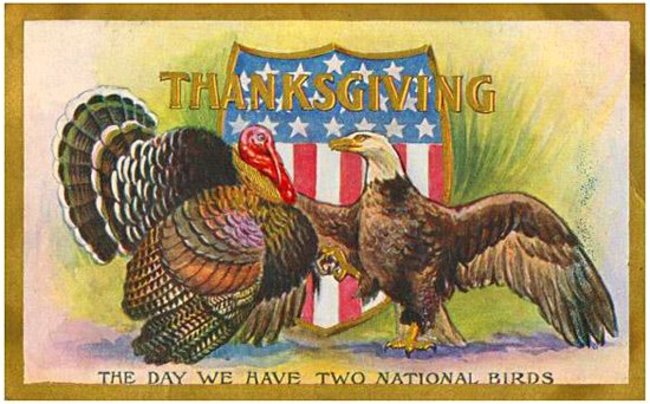
No, the turkey was not in the running for national bird. - Benjamin Franklin never proposed the turkey as a symbol for America. What he did was write a letter to his daughter in which he praised the turkey as being "a much more respectable bird" than the bald eagle. Bald eagles frequently scavenge on the bodies of dead animals, and steal food from each other and other predators. Ben dont play that.
15
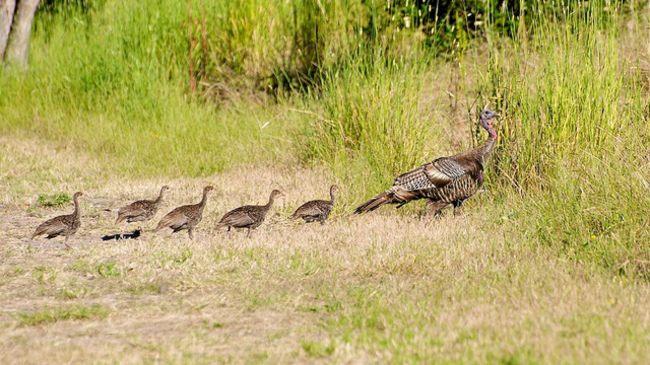
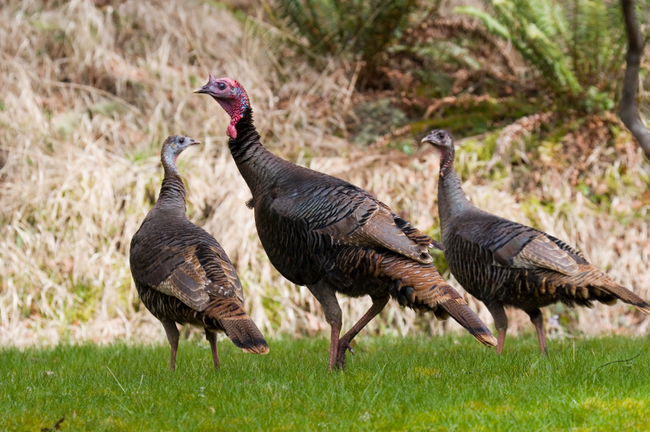
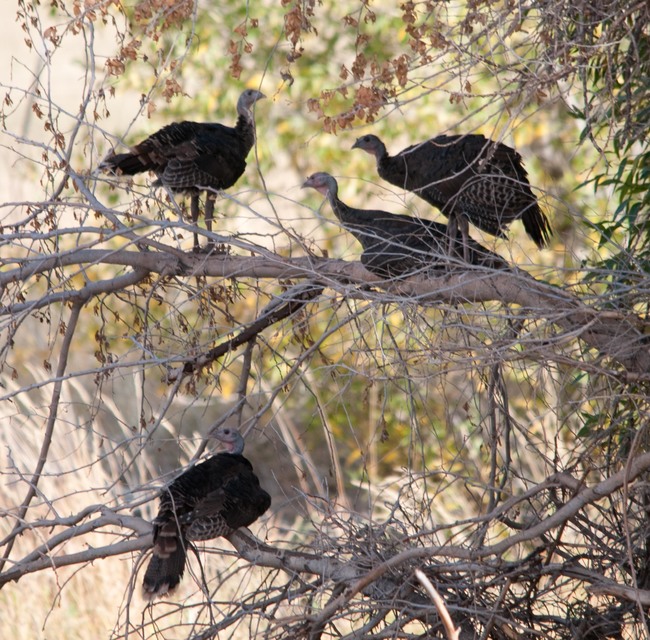
Wild turkeys sleep in trees. - Getting off the ground keeps them safe from predators, like coyotes, foxes and raccoons. Turkey flocks prefer to sleep together in one tree, and when they wake up, they yelp softly before jumping down. This allows them to make sure that the rest of the roosting group is okay after a night of not seeing or hearing one another.
16
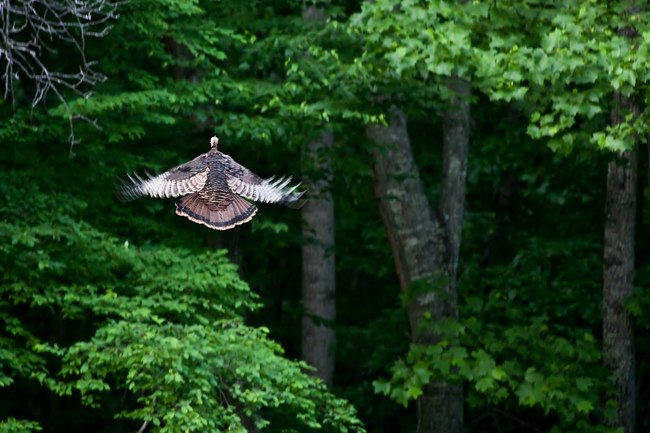
Turkeys are not sitting ducks. - Wild turkeys can run at speeds of up to 25 miles per hour and fly as fast as 40 miles per hour. They can also glide without flapping their wings for almost a mile. They know how to swim, too. If we didn't imprison domestic turkeys in jailhouse pens, they'd probably be much harder to catch.
19
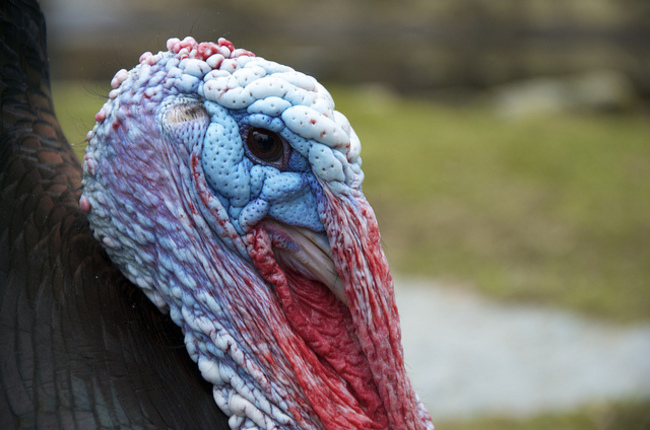
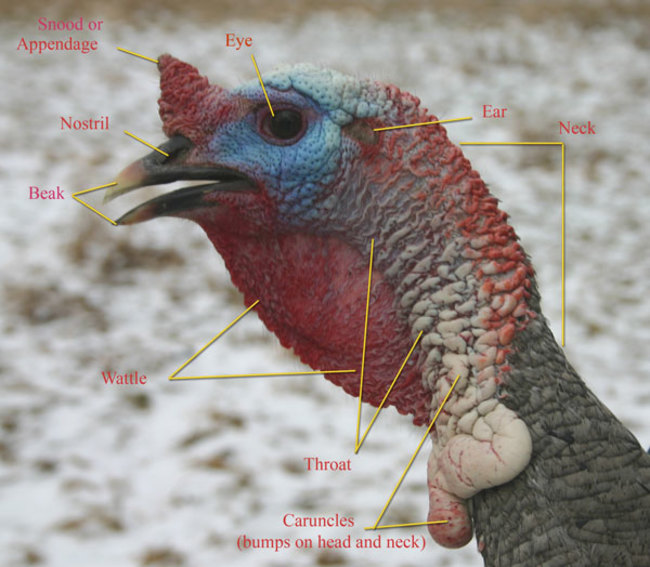
For turkeys, snood size matters. - Studies have shown that snood length is associated with male turkey health. It also gets them laid. A 1997 study in the Journal of Avian Biology found that female turkeys prefer males with long snoods and that snood length can also be used to predict the winner of a competition between two males. Just like hipster beards.
20
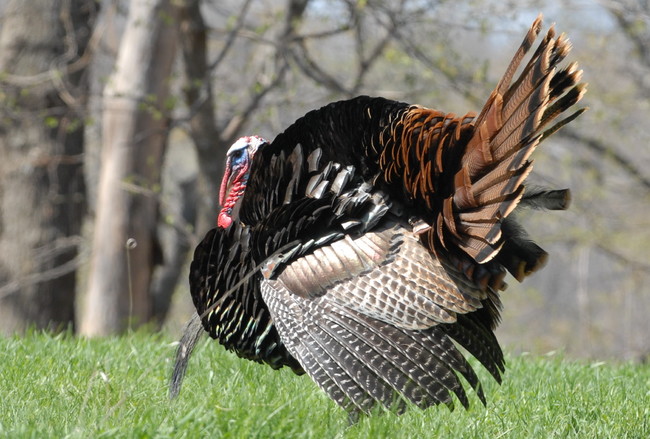
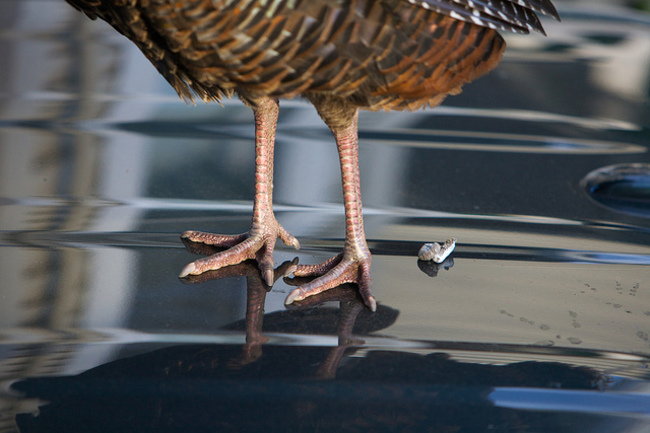
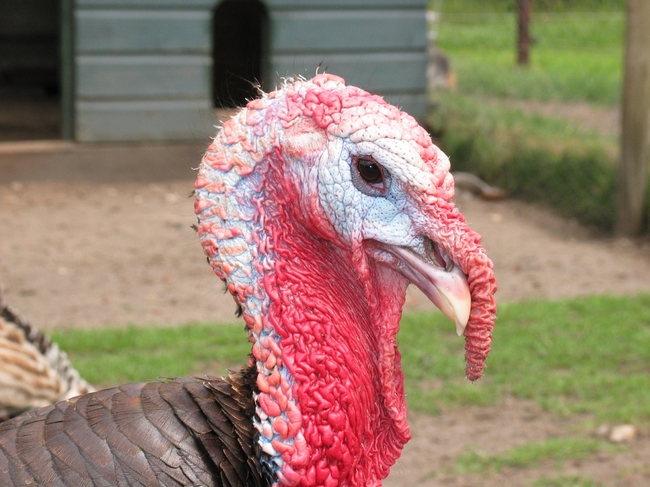
Turkeys wear a lot of cranial accessories. - An adult gobbler has a beard of modified feathers on his breast that reaches seven inches or more long, and has sharp spurs on his legs for fighting. A hen is smaller, weighing around 8 to 12 pounds, and has no beard or spurs. Both genders have a snood a dangly appendage on the face, wattle the red dangly bit under the chin, caruncles, and only a few feathers on the head.
Most Popular