40 pictures from the Last days of Germany in WWII
an interesting look back
Published 7 years ago in Wow
9
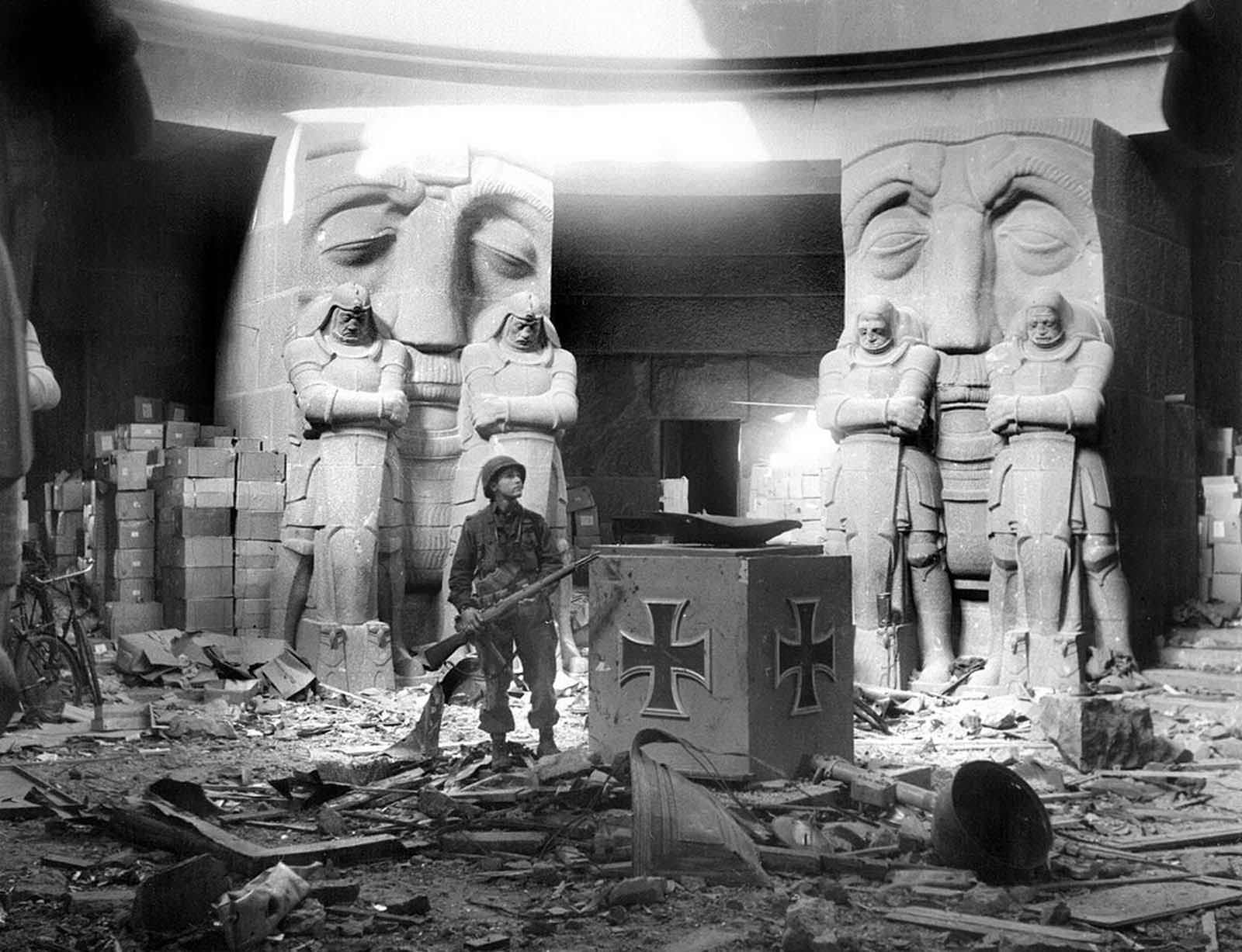
A U.S. soldier stands in the middle of rubble in the Monument of the Battle of the Nations in Leipzig after they attacked the city on April 18, 1945. The huge monument commemorating the defeat of Napoleon in 1813 was one of the last strongholds in the city to surrender. One hundred and fifty SS fanatics with ammunition and foodstuffs stored in the structure to last three months dug themselves in and were determined to hold out as long as their supplies would allow. American First Army artillery eventually blasted the SS troops into surrender.
13
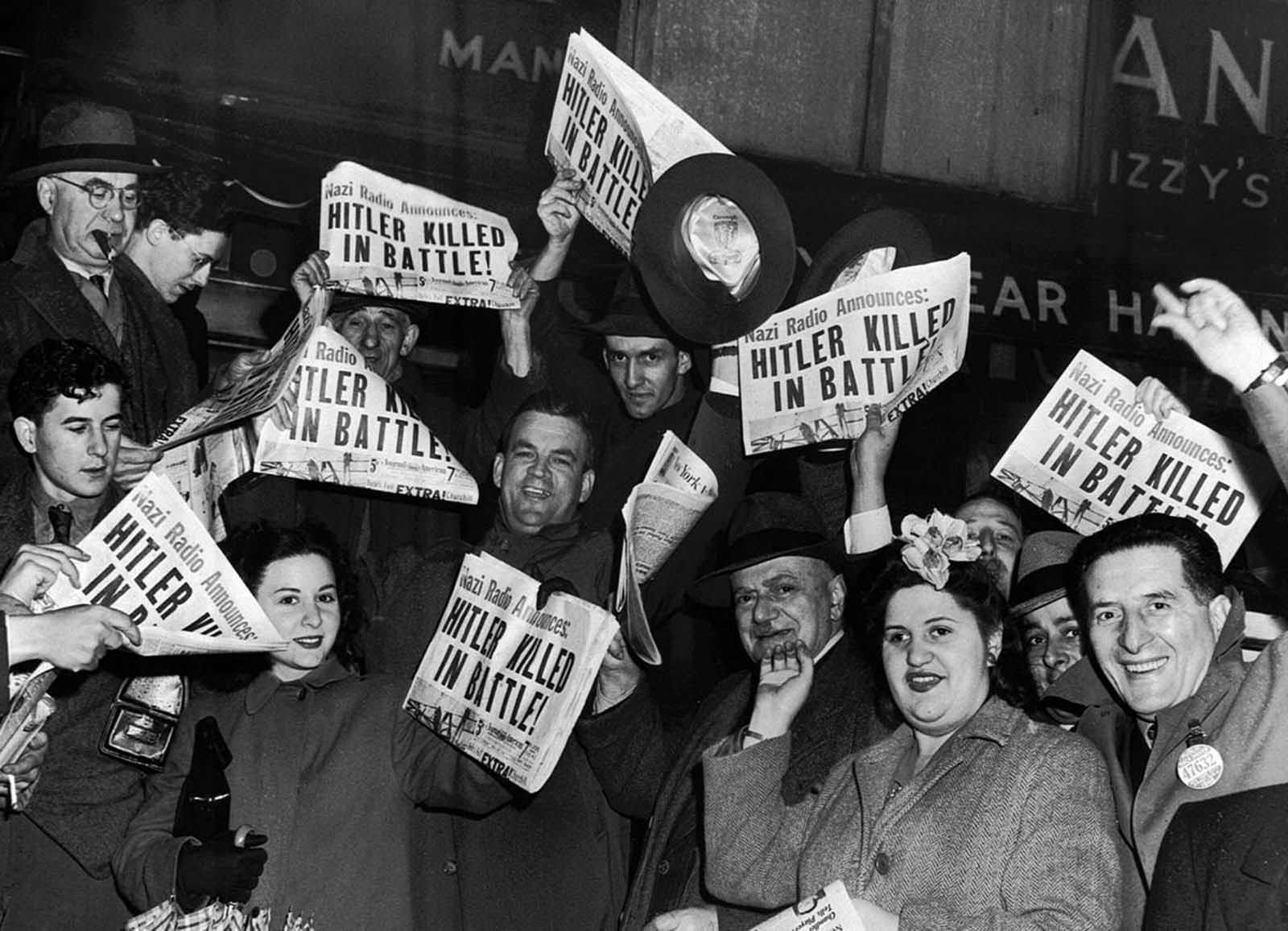
The subway rush hour is brought to a standstill in New York City, May 1, 1945 as the report of Hitler’s death was received. The German leader and head of the Nazi Party had shot himself in the head in a bunker in Berlin on April 30, 1945. His successor, Karl Dönitz, announced on German radio that Hitler had died the death of a hero, and that he would continue the war against the Allies.
14
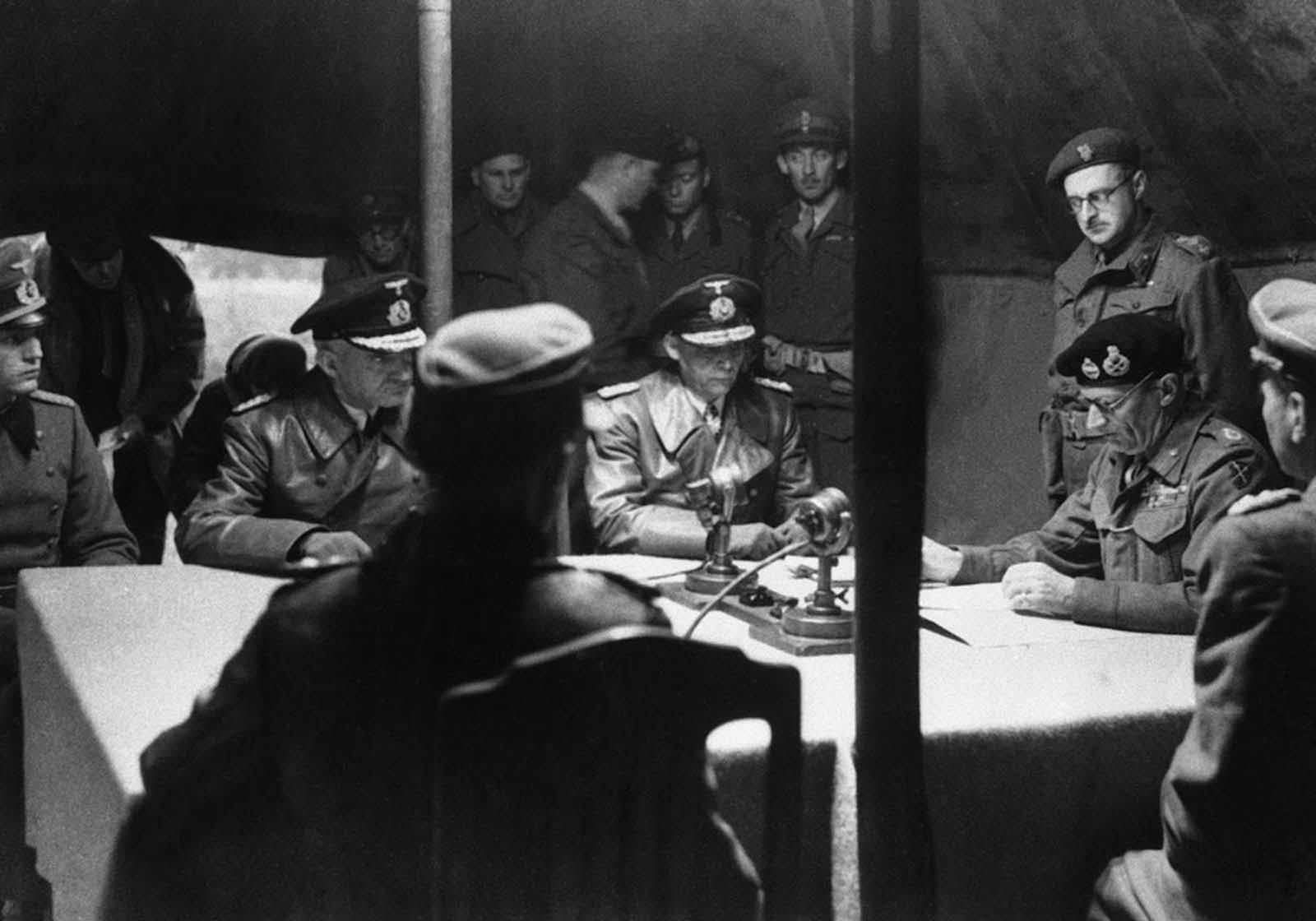
Britain’s Field Marshal Bernard Montgomery, right, reads over the surrender pact, while senior German officers, from left, Major Friedel, Rear Admiral Wagner and Admiral Hans-Georg Von Friedeburg, look on, in a tent at Montgomery’s 21st Army Group headquarters, at Luneburg Heath, on May 4, 1945. The pact agreed a ceasefire on the British fronts in north west Germany, Denmark and Holland as from 8am on May 5. German forces in Italy had surrendered earlier, on April 29, and the remainder of the the Army in Western Europe surrendered on May 7 — on the Eastern Front, the German surrender to the Soviets took place on May 8, 1945. More than five years of horrific warfare on European soil was officially over.
20
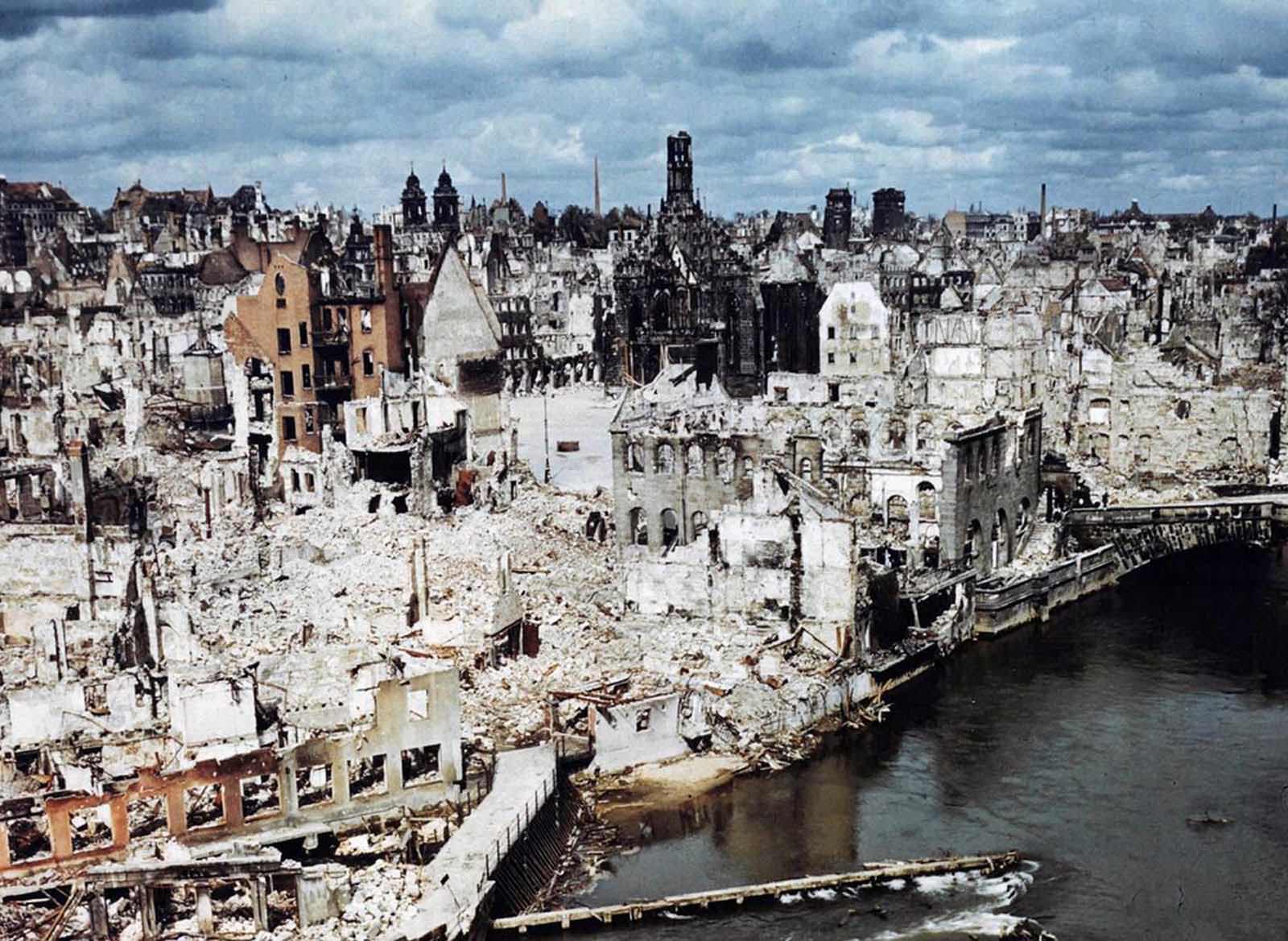
A color photograph of the bombed-out historic city of Nuremberg, Germany in June of 1945, after the end of World War II. Nuremberg had been the host of huge Nazi Party conventions from 1927 to 1938. The last scheduled rally in 1939 was canceled at the last minute due to a scheduling conflict: the German invasion of Poland one day prior to the rally date. The city was also the birthplace of the Nuremberg Laws, a set of draconian antisemitic laws adopted by Nazi Germany. Allied bombings from 1943 until 1945 destroyed more than 90% of the city center, and killed more than 6,000 residents. Nuremberg would soon become famous one last time as the host of the Nuremberg Trials — a series of military tribunals set up to prosecute the surviving leaders of Nazi Germany. The war crimes these men were charged with included “Crimes Against Humanity”, the systematic murder of more than 10 million people, including some 6 million Jews.
27
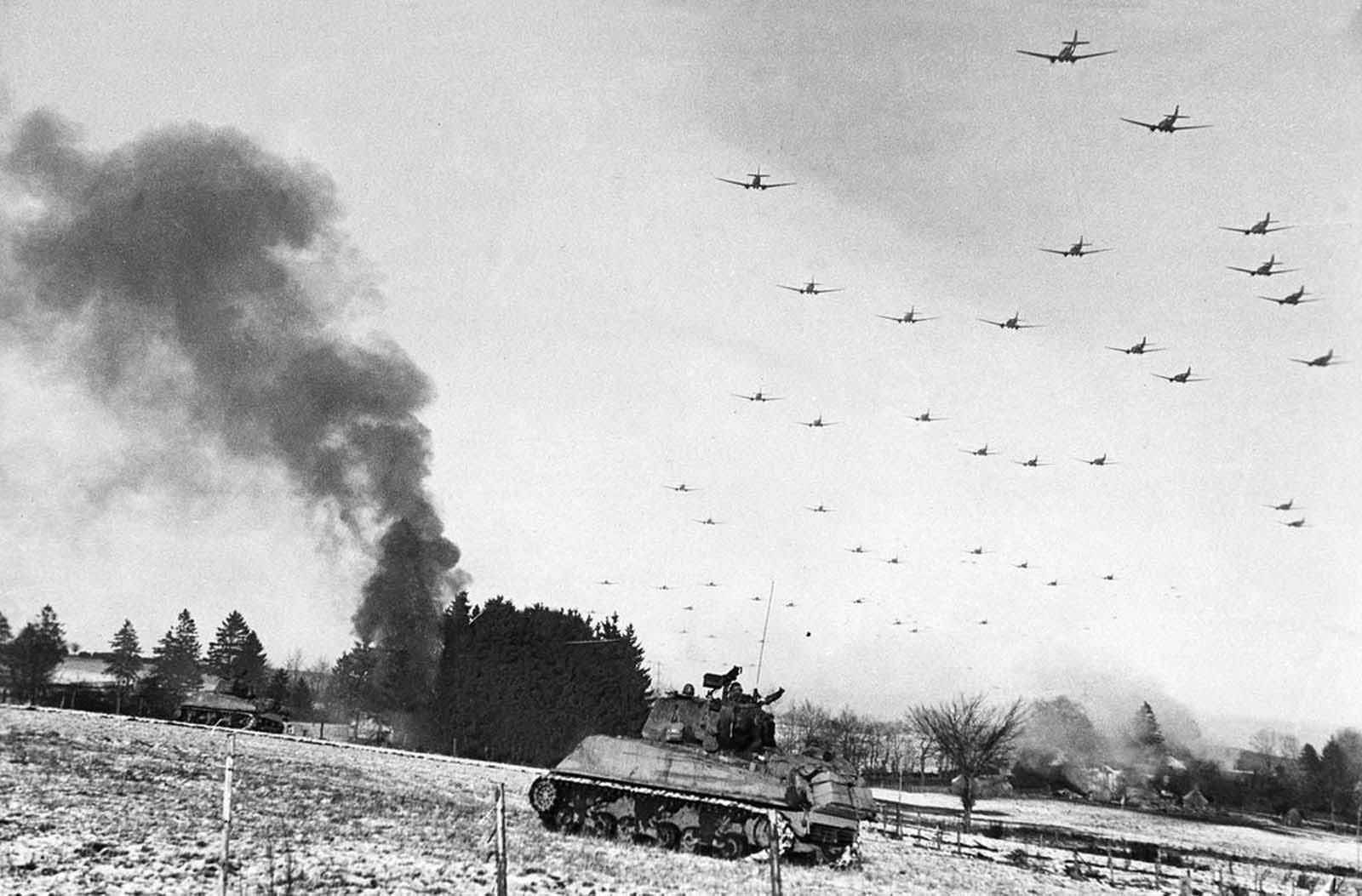
Low flying C-47 transport planes roar overhead as they carry supplies to the besieged American Forces battling the Germans at Bastogne, during the enemy breakthrough on January 6, 1945 in Belgium. In the distance, smoke rises from wrecked German equipment, while in the foreground, American tanks move up to support the infantry in the fighting.
30
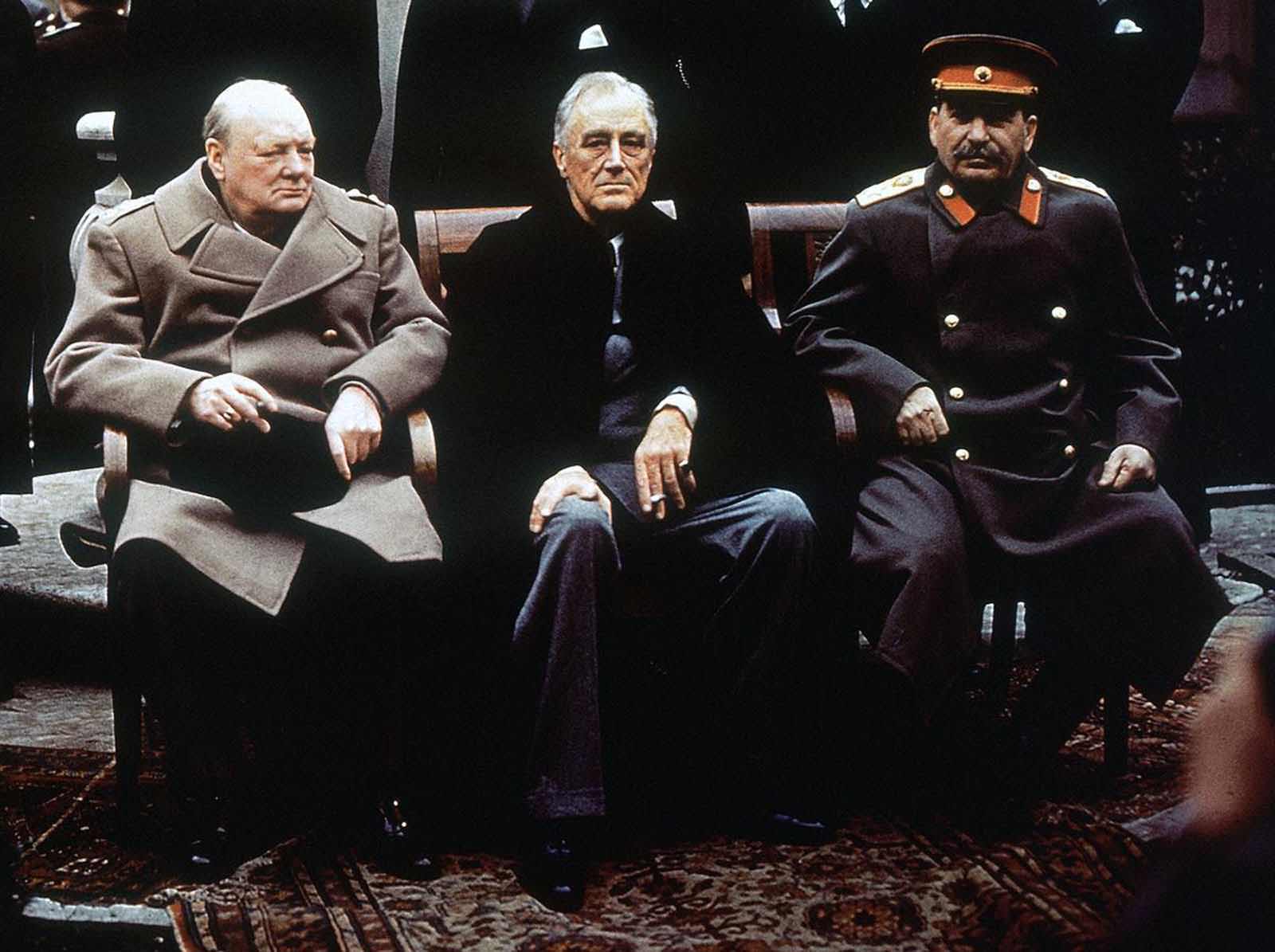
From left, British Prime Minister Winston Churchill, U.S. President Franklin Roosevelt and Soviet Premier Josef Stalin sit on the patio of Livadia Palace, Yalta, Crimea, in this February 4, 1945 photo. The three leaders were meeting to discuss the post-war reorganization of Europe, and the fate of post-war Germany.
31
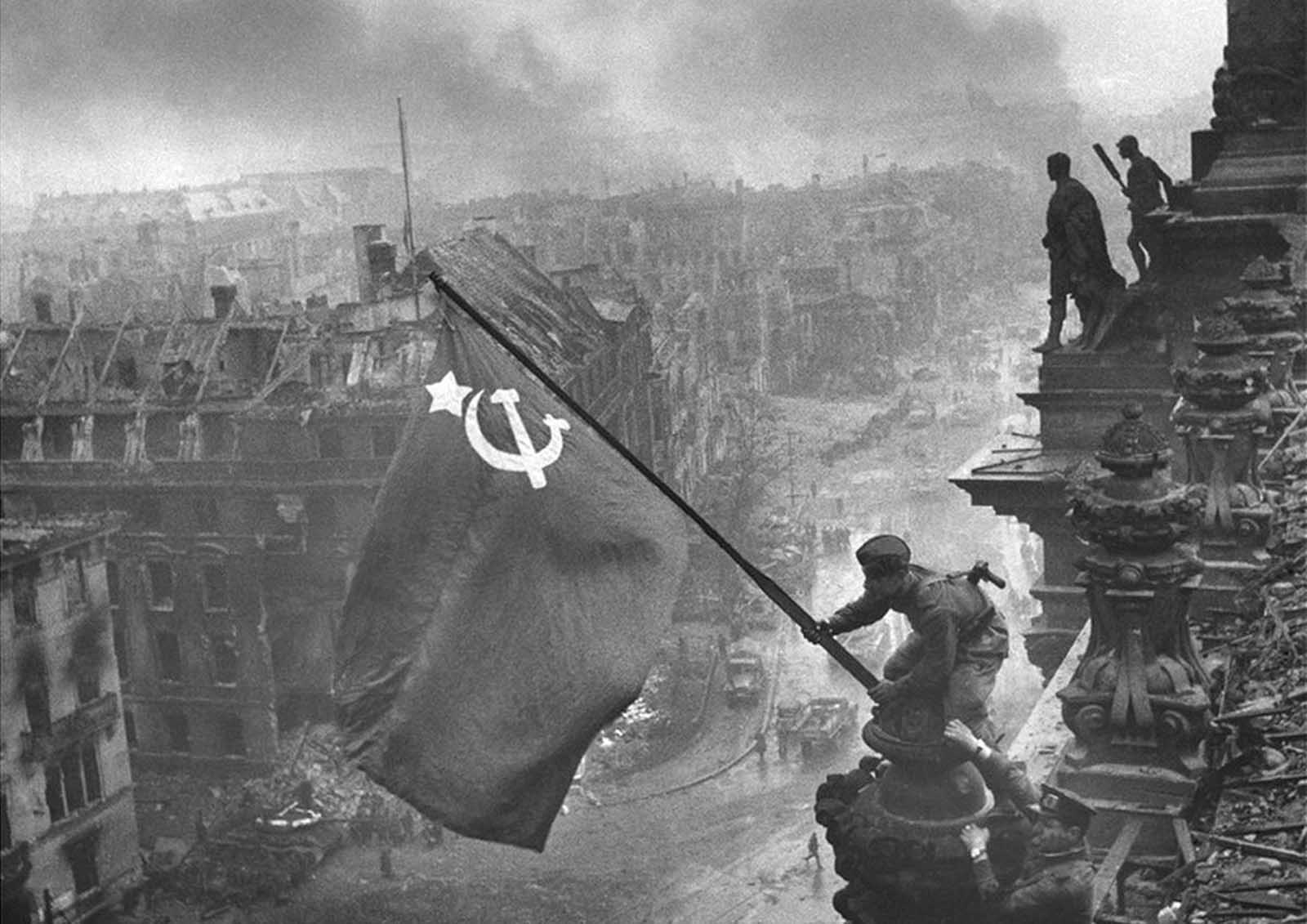
“Raising a flag over the Reichstag” the famous photograph by Yevgeny Khaldei, taken on May 2, 1945. The photo shows Soviet soldiers raising the flag of the Soviet Union on top of the German Reichstag building following the Battle of Berlin. The moment was actually a re-enactment of an earlier flag-raising, and the photo was embroiled in controversy over the identities of the soldiers, the photographer, and some significant photo editing.
32
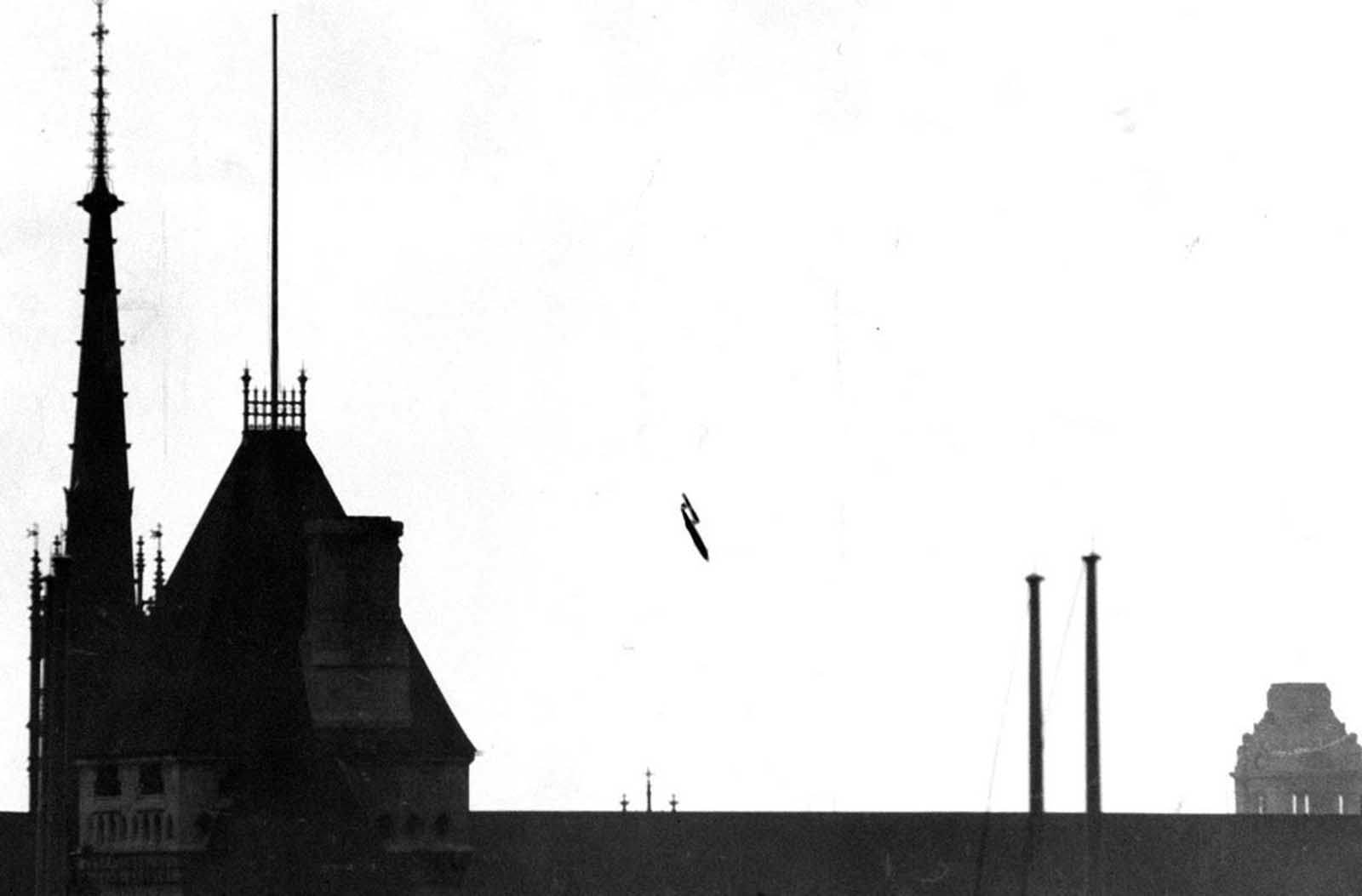
Across the Channel, Britain was being struck by continual bombardment by thousands of V-1 and V-2 bombs launched from German-controlled territory. This photo, taken from a fleet street roof-top, shows a V-1 flying bomb “buzzbomb” plunging toward central London. The distinctive sky-line of London’s law-courts clearly locates the scene of the incident. Falling on a side road off Drury Lane, this bomb blasted several buildings, including the office of the Daily Herald. The last enemy action of British soil was a V-1 attack that struck Datchworth in Hertfordshire, on March 29 1945.
33
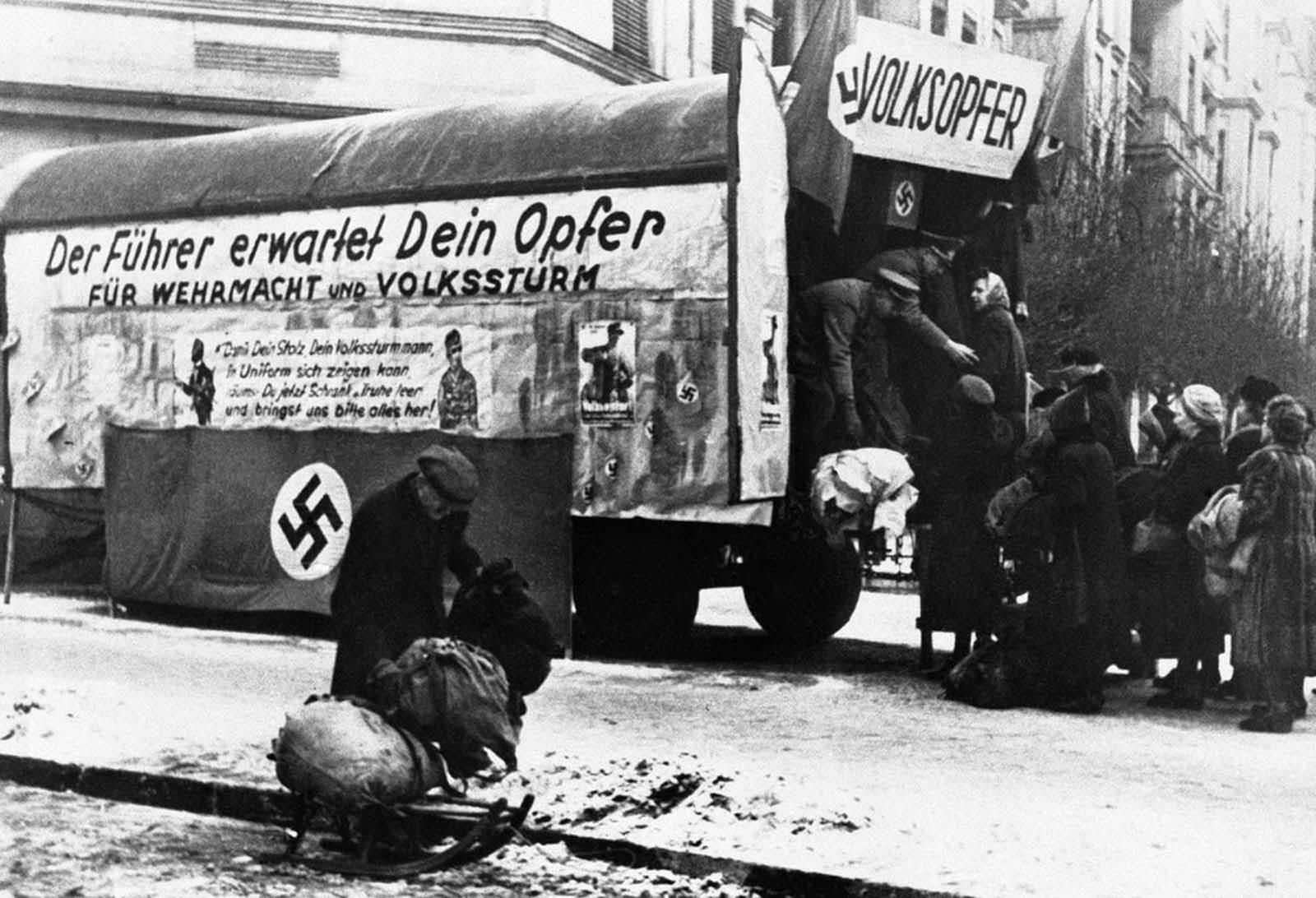
With more and more members of the Volkssturm (Germany’s National Militia) being directed to the front line, German authorities were experiencing an ever-increasing strain on their stocks of army equipment and clothing. In a desperate attempt to overcome this deficiency, street to street collection depots called the Volksopfer, meaning Sacrifice of the people, scoured the country, collecting uniforms, boots and equipment from German civilians, as seen here in Berlin on February 12, 1945. The Volksopfer bears the words “The Fuhrer expects your sacrifice for Army and Home Guard. So that you’re proud your Home Guard man can show himself in uniform – empty your wardrobe and bring its contents to us”.
37
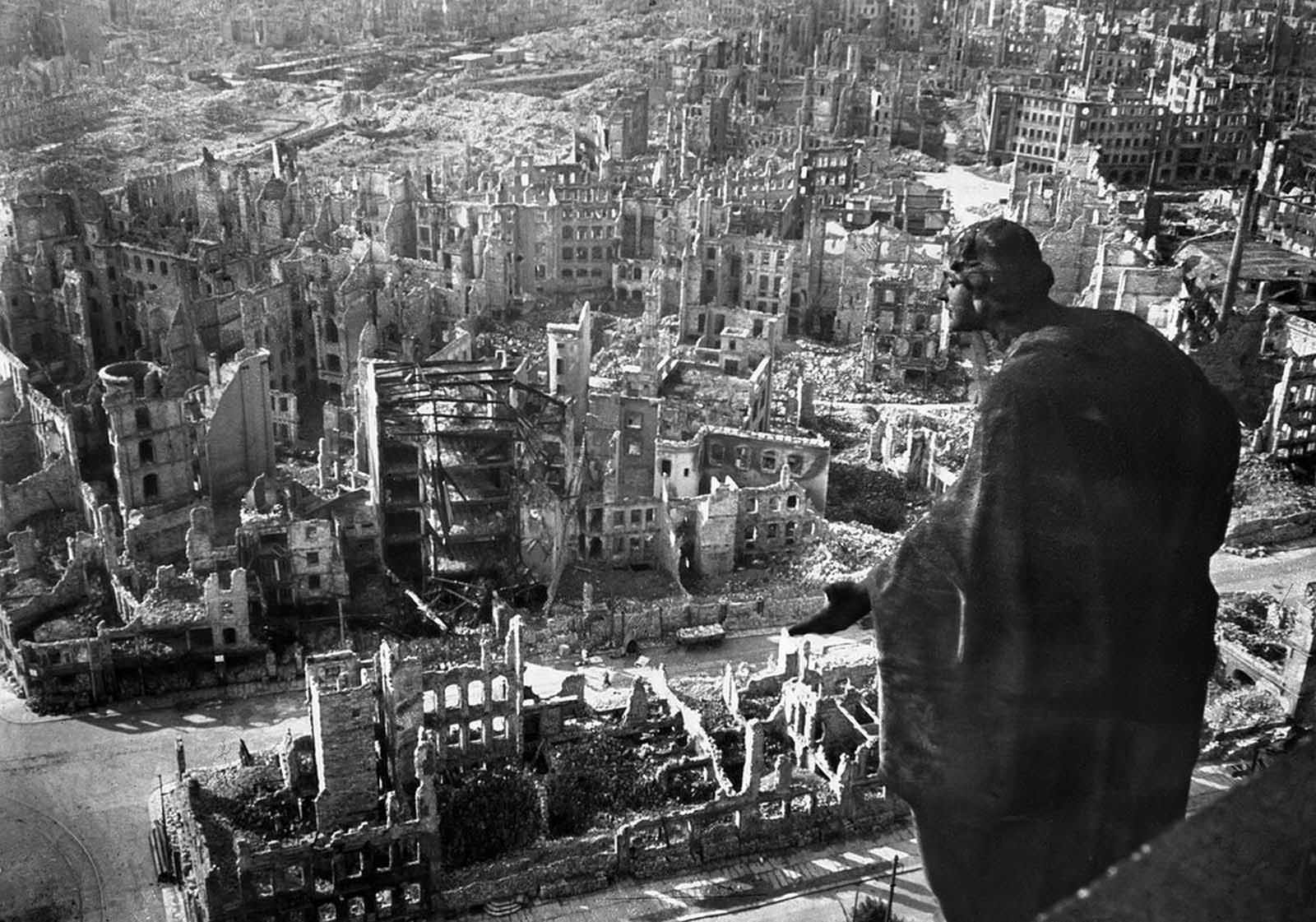
A view taken from Dresden’s town hall of the destroyed Old Town after the allied bombings between February 13 and 15, 1945. Some 3,600 aircraft dropped more than 3,900 tons of high-explosive bombs and incendiary devices on the German city. The resulting firestorm destroyed 15 square miles of the city center, and killed more than 22,000.
40
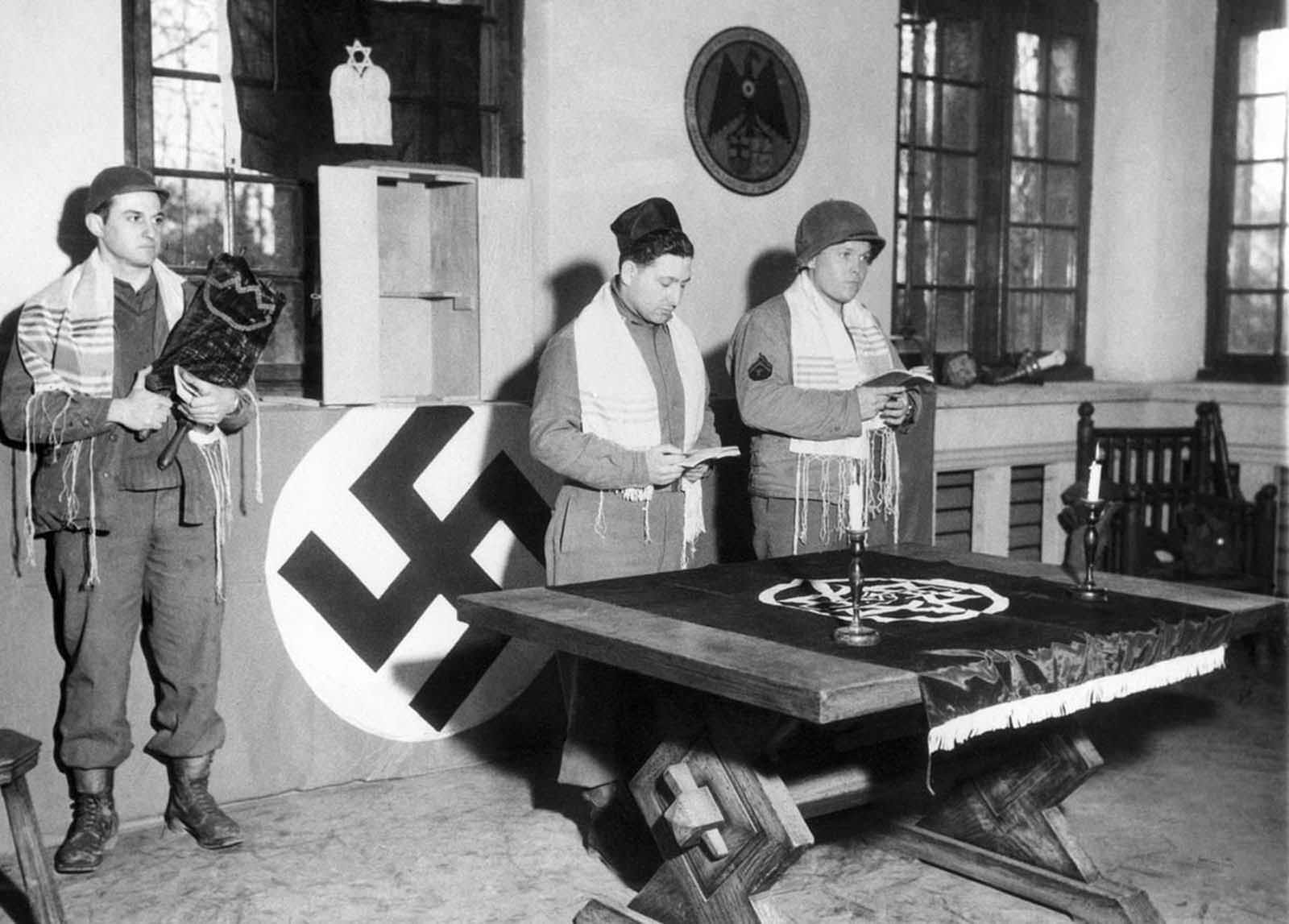
Pfc. Abraham Mirmelstein of Newport News, Virginia, holds the Holy Scroll as Capt. Manuel M. Poliakoff, and Cpl. Martin Willen, of Baltimore, Maryland, conduct services in Schloss Rheydt, former residence of Dr. Joseph Paul Goebbels, Nazi propaganda minister, in Münchengladbach, Germany on March 18, 1945. They were the first Jewish services held east of the Rur River and were offered in memory of soldiers of the faith who were lost by the 29th Division, U.S. 9th Army.
Most Popular