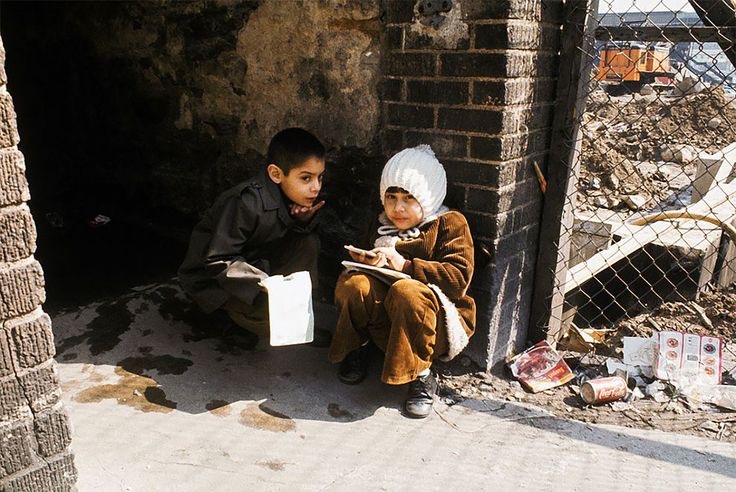
The 1970s were a time of dramatic change, but for millions of Americans living in poverty, progress often felt out of reach. As inflation soared, factories closed, and oil prices spiked, families across both rural towns and city neighborhoods struggled to make ends meet. Government safety nets expanded, yet inequality deepened, and the promise of the postwar boom faded fast.
Daily life for the poor meant stretching every dollar, relying on secondhand goods, and finding community support where possible. Old clothes and imagination games, the reality was one of resilience and resourcefulness amid economic uncertainty.
Behind the decade’s bright colors and disco lights was another story, one of survival and strength in the face of hardship. This is what living looked like if you were poor in the 1970s.
1
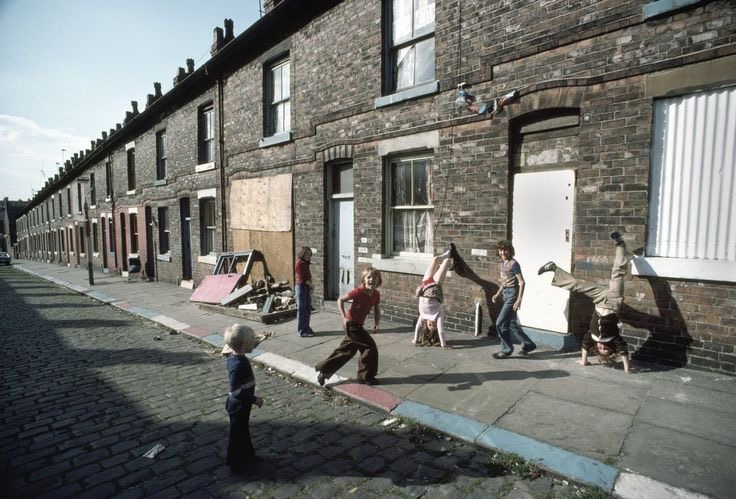
Kids on the Street
Children play in the street of an urban neighborhood. In poor areas, streets often doubled as playgrounds due to the lack of public parks or safe recreational spaces.
2
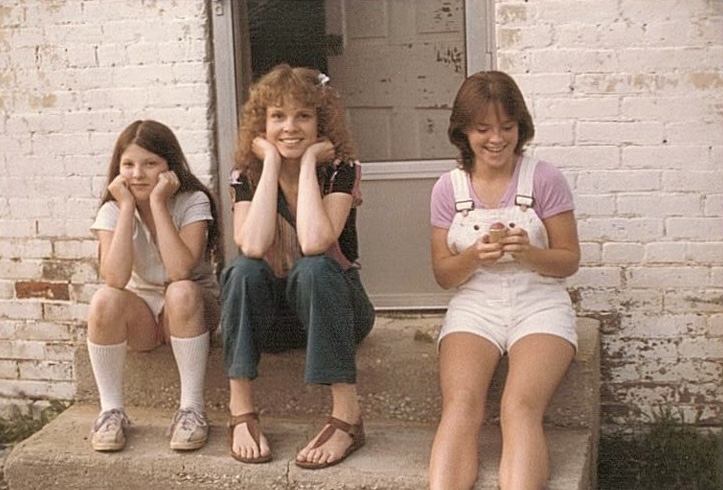
Three Girls on the Porch
Three young girls sit outside their home on a porch in a low-income neighborhood. Many families in the 1970s spent much of their time outdoors during warm months, as small apartments were crowded and often lacked air conditioning.
3
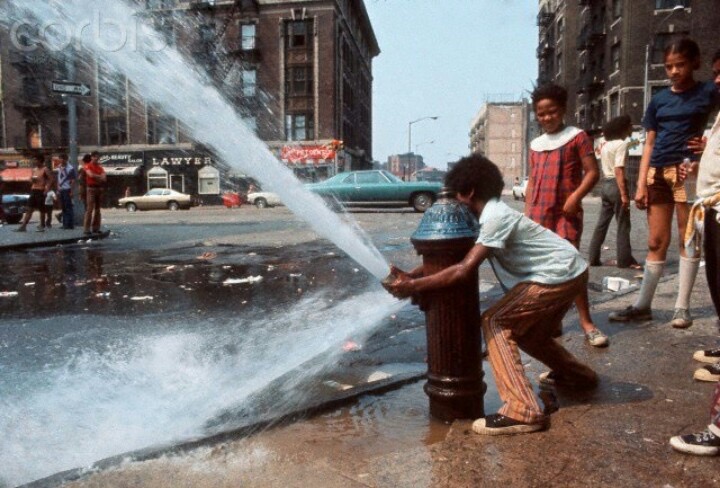
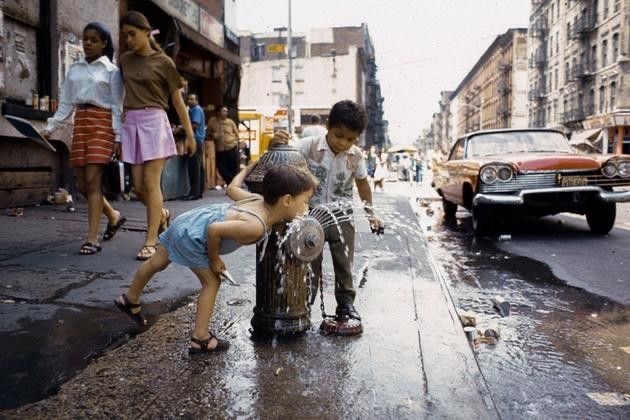
Children Playing with a Fire Hydrant
On hot summer days, city children cooled off by opening fire hydrants. This informal tradition reflected limited access to swimming pools and other recreational facilities in working-class communities.
4
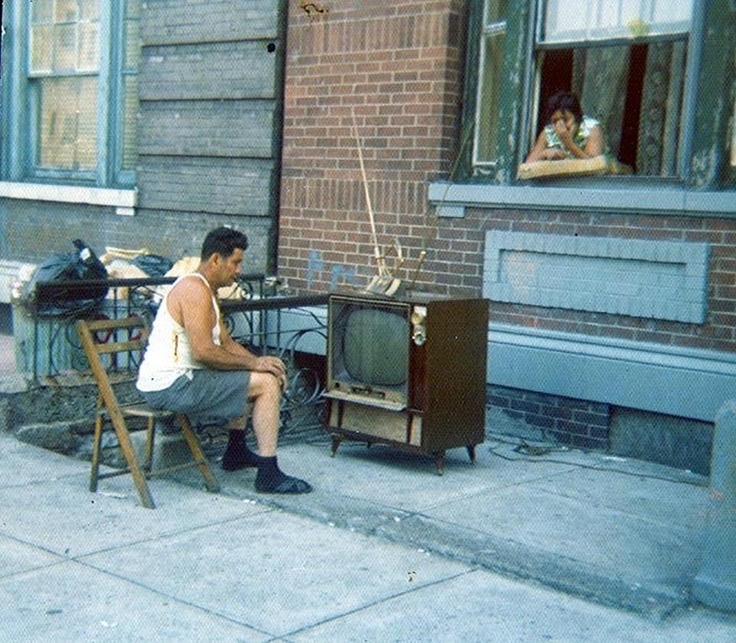
Man Watching TV on the Sidewalk
A man sets his television on the sidewalk while a woman watches from a window. In dense city neighborhoods, people often brought domestic life outside during hot evenings to escape the heat of small apartments.
5
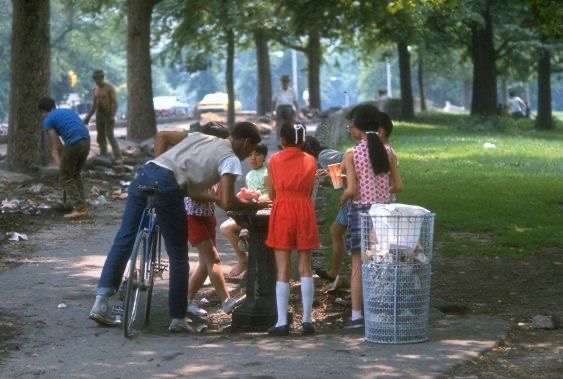
Children at the Park Fountain
For many low-income families, parks provided one of the few free and accessible places for children to spend time outdoors.
6
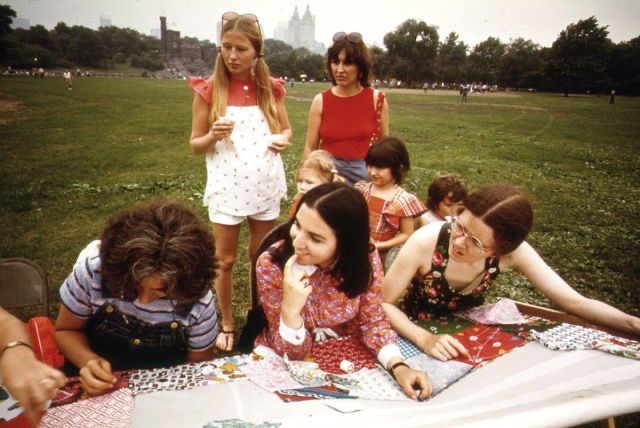
Girls Doing Patchwork in the Park
Young women work on patchwork blankets in a park. Sewing and mending clothes at home were common practices among families with limited income during the 1970s.
7
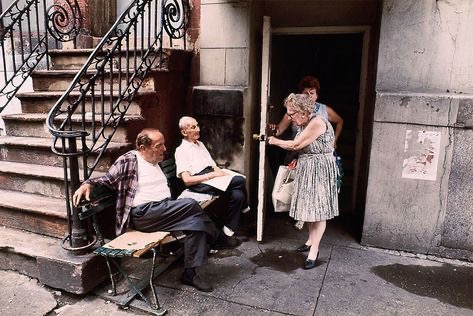
Elderly Neighbors on the Sidewalk
Older residents sit outside their homes on the sidewalk. In many neighborhoods, sidewalks served as social spaces where residents spent time and looked after the community.
8
Children Playing in the Water
Children play again with water from a hydrant. Such scenes were typical in cities where poverty and heat combined, and where few homes had private yards or air conditioning.
9
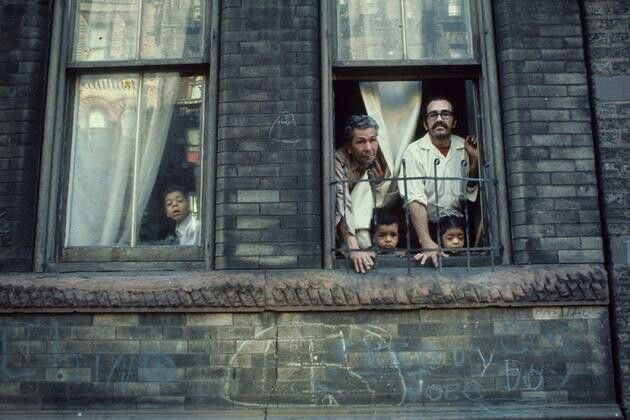
Family Watching from the Window
A family looks out from their apartment window. Many households lived in small, overcrowded units in deteriorating buildings during the economic struggles of the decade.
10
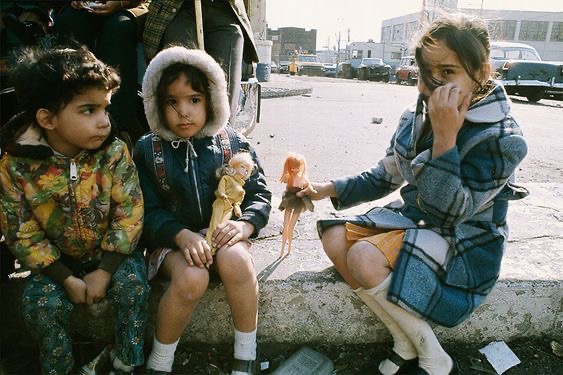
Children Playing with Dolls in the Street
Girls play with dolls on the pavement. Despite limited means, children used whatever toys they could find or share, often playing in public spaces.
11
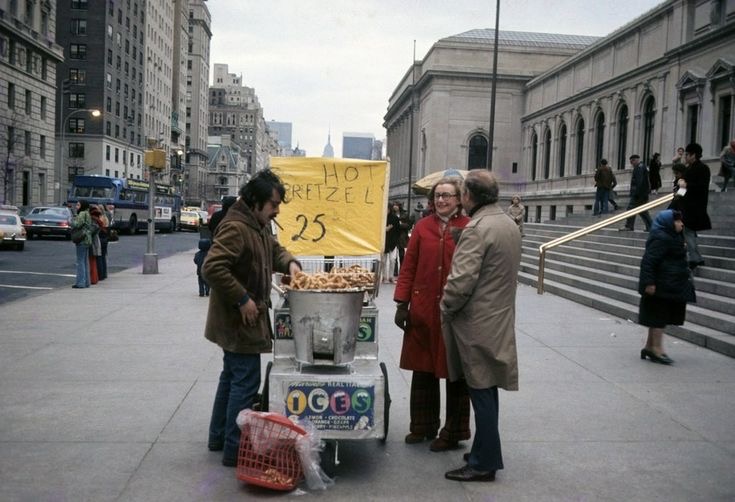
Pretzel Vendor, 25 Cents
A street vendor sells pretzels for 25 cents. Informal or small-scale street vending was a common source of income for people with few employment options in the 1970s.
12
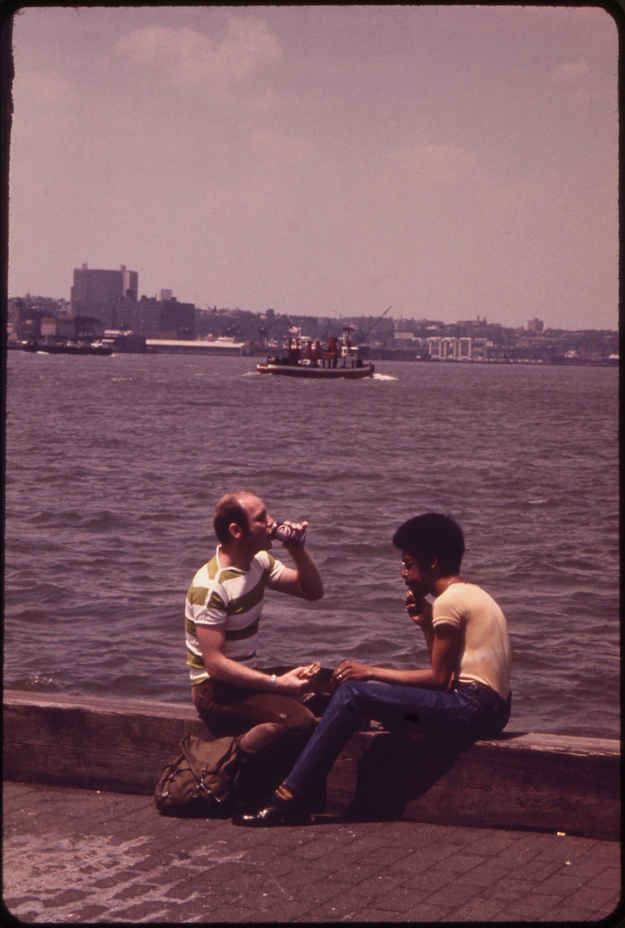
Men Drinking Beer by the River
Informal gatherings like these were part of everyday social life in working-class communities where entertainment options were few and inexpensive.
13
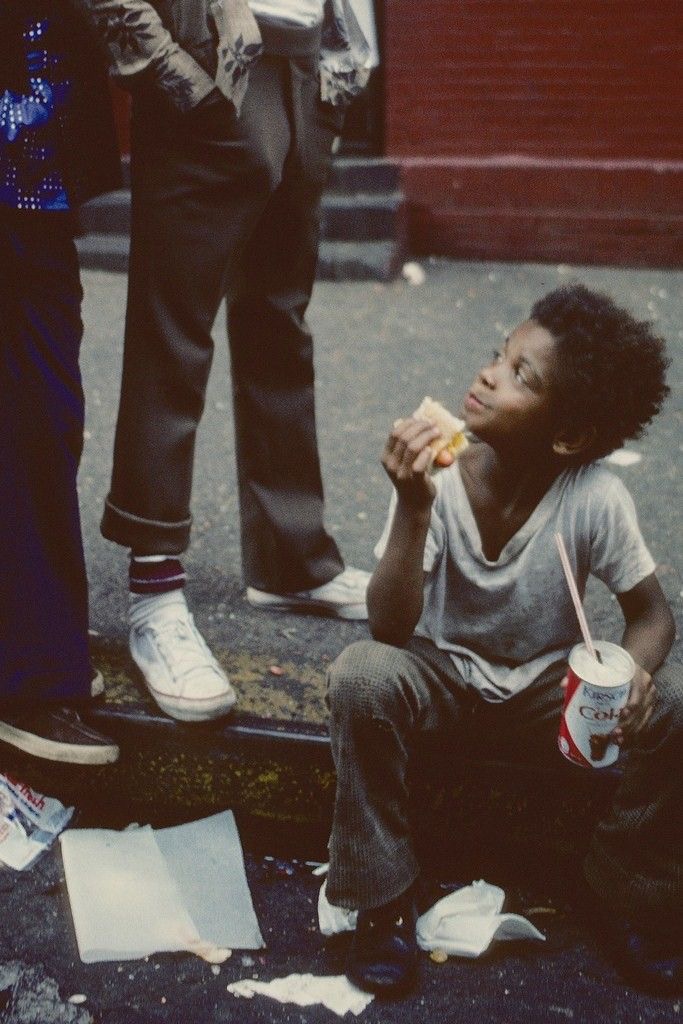
Boy with Soda and Burger
A boy eats a hamburger and drinks a soda on the street. Fast food became increasingly common and affordable for working-class families during this period.
14
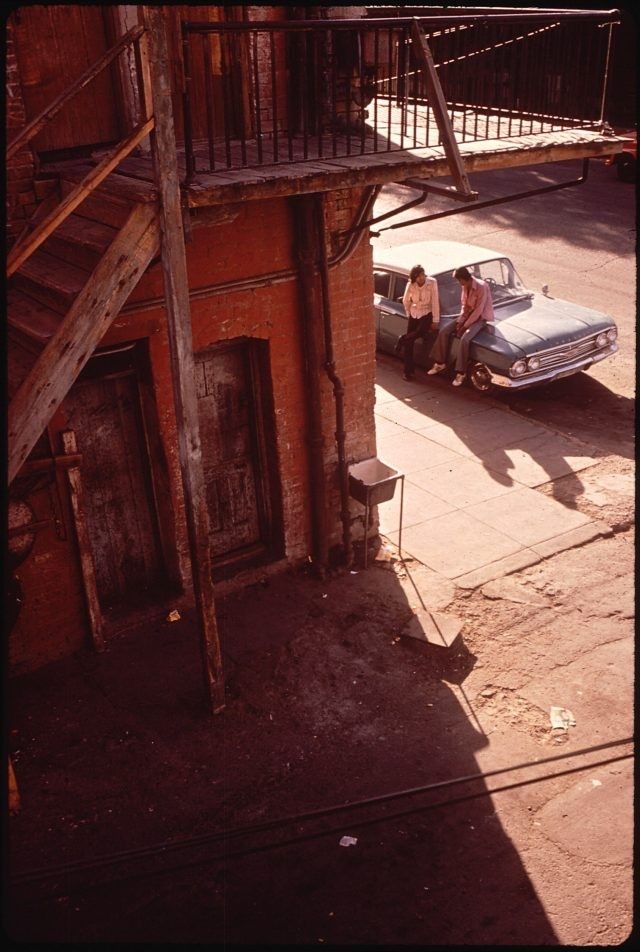
Neglected Street
Many U.S. cities in the 1970s faced disinvestment, unemployment, and declining public services, leaving neighborhoods visibly neglected.
15
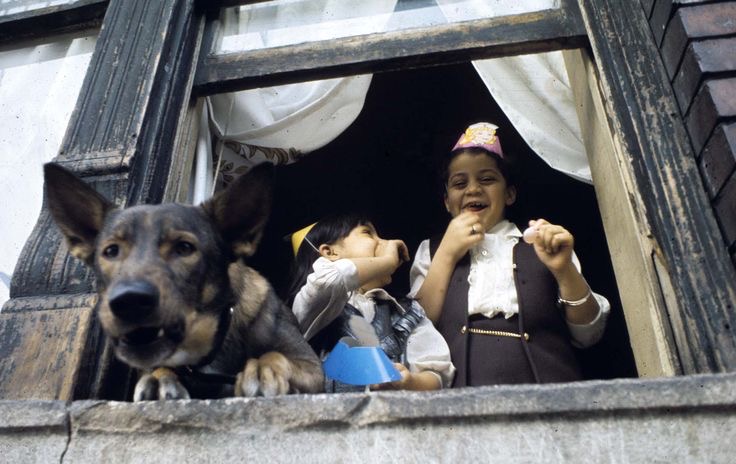
Children and Dog at the Window
Children and a dog look out from a window. Watching street life from home was part of daily routine in dense, low-income neighborhoods.
16
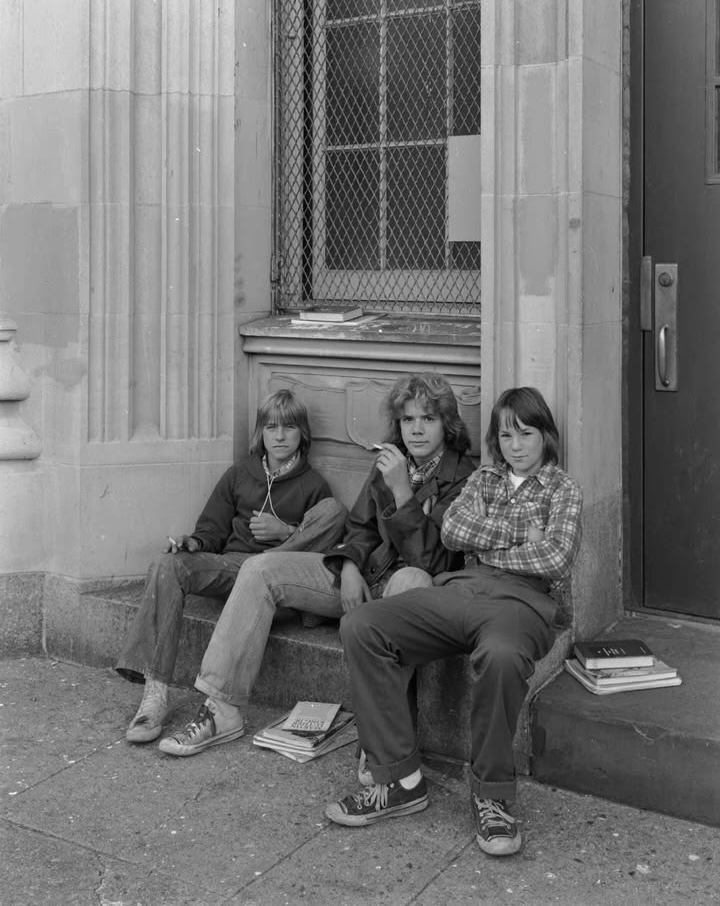
Teenagers Smoking on the Street
Teenagers gather and smoke on the street. Limited recreational opportunities and economic hardship contributed to youth spending much of their time in public areas.
17
Children Playing on the Sidewalk
Children play on the sidewalk using simple materials. With few safe or organized play areas, sidewalks and streets became the main setting for children’s activities.
18
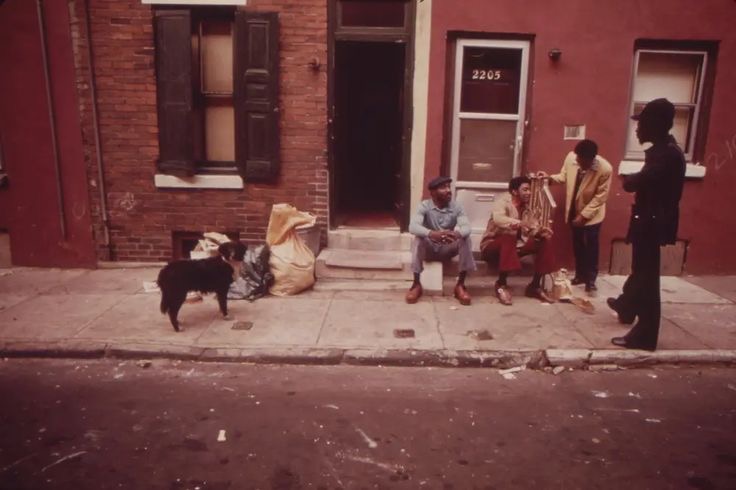
Men Gathering on the Sidewalk
Men stand together on the sidewalk, talking. For many residents, social life happened outdoors, where people met daily to exchange news or discuss work.
19
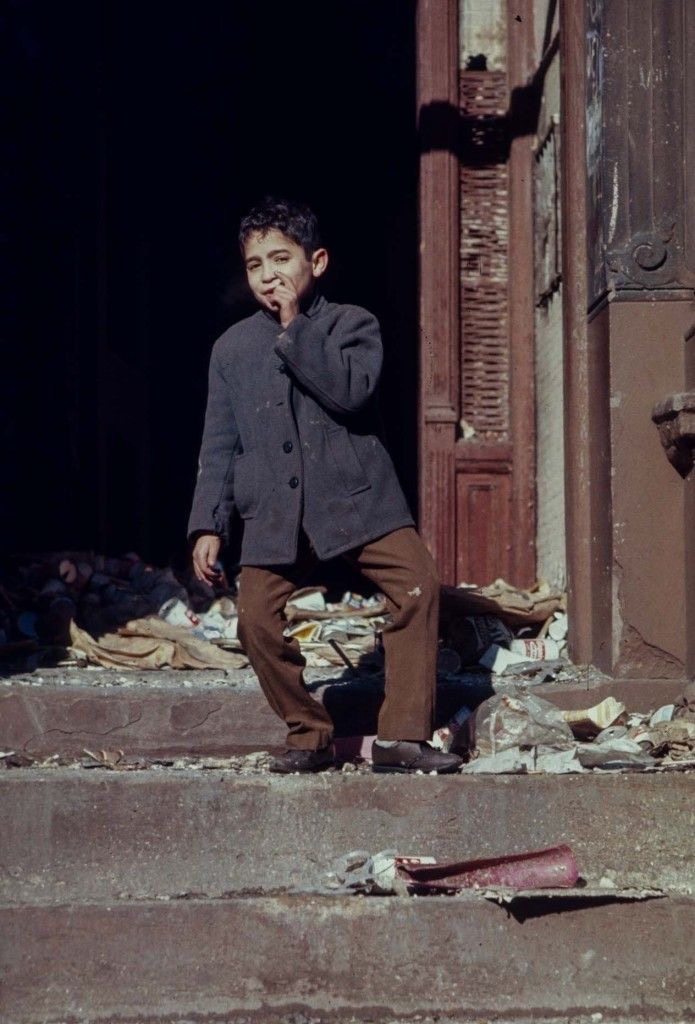
Boy Leaving Trash-Filled Building
Poor waste collection and lack of city maintenance were common in low-income urban neighborhoods during this period.
20
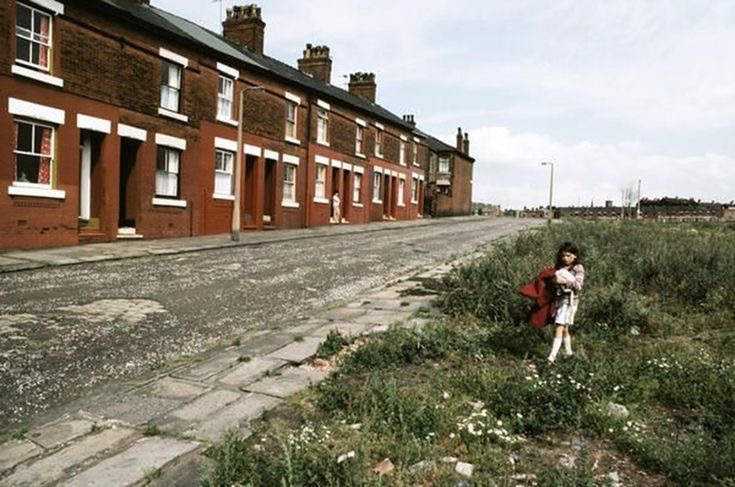
Abandoned Street and Girl
A young girl stands alone on an empty street. Urban decay and population decline left many areas partially abandoned by the mid-1970s.